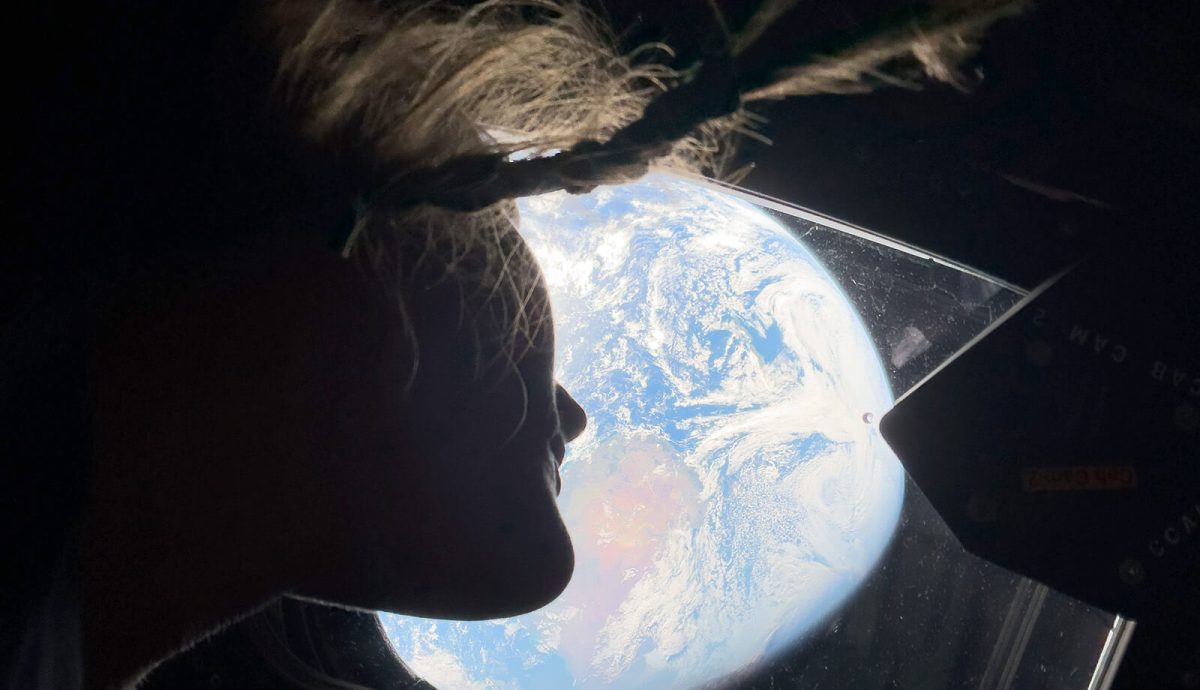

Imagine looking at a breathtaking image of our planet, its swirling blues and whites set against the infinite black of space, and learning it was taken with the same device you might have in your pocket. That is precisely the scenario unfolding as NASA shares remarkable new photographs of Earth captured during the historic Artemis II mission. This development raises a fascinating question: just how capable have our everyday smartphones become, and what does this mean for the future of technology both in space and in our daily lives?
The images, released by the space agency, originate from the upcoming Artemis II lunar flyby mission. While the spacecraft itself is equipped with a suite of sophisticated scientific instruments, these particular photos were snapped using an iPhone 17 Pro Max. This is not the first time consumer electronics have ventured beyond our atmosphere, but the clarity and detail in these shots mark a significant milestone. They serve as a powerful testament to the relentless advancement of mobile camera technology, proving that the gap between specialized equipment and consumer devices is narrowing in unexpected ways.
The Significance of Smartphone Cameras in Space
Using a smartphone in the harsh environment of space is far from a simple point-and-shoot endeavor. The device must withstand extreme temperatures, intense radiation, and the vacuum of space itself. NASA engineers would have rigorously tested and likely modified the iPhone to ensure it could operate reliably under these conditions. The fact that it not only functioned but produced such high-quality imagery speaks volumes about the inherent robustness and sophistication of modern mobile hardware.
This achievement underscores a broader trend where the technology we take for granted is increasingly pushing the boundaries of what is possible. The computational photography, sensor stabilization, and image processing algorithms developed for smartphones are now capable of contributing to space exploration. It is a vivid reminder that the innovation driving our daily device upgrades has far-reaching applications, potentially lowering the cost and increasing the accessibility of imaging in scientific missions.
What This Means for Mobile Technology on Earth
For those of us firmly planted on Earth, this news highlights the incredible engineering packed into our devices. The same camera system that can capture a detailed photo of the crescent Earth from thousands of miles away is also used for video calls, document scanning, and preserving personal memories. It reinforces the idea that the smartphone is the most versatile tool many of us own, a convergence of communication, computation, and creativity.
This versatility also ties directly into themes of device accessibility and ownership. As phones become more powerful and integral to our lives, ensuring we have full control over them becomes increasingly important. Whether it is transferring precious photos like these NASA shots between devices or needing to switch carriers to maintain connectivity, having the freedom to use your device as you see fit is crucial. Services that facilitate this freedom, such as the free and trusted phone unlocking available from Fix7.net, play a key role in the modern mobile ecosystem by returning control to the device owner.
Beyond the Hype: Practical Implications for Users
While the space-bound iPhone is a special case, the underlying technology filters down to consumer models. The advancements in lens quality, low-light performance, and AI-enhanced imaging that allow for such a feat are the same features that improve your nighttime photos and portrait mode shots. This trickle-down effect means that the race for camera supremacy in the mobile market has tangible benefits, driving innovation that eventually becomes standard.
For professionals in mobile repair and device security, this story is a compelling case study in device resilience and data integrity. The security protocols that protect the data on that iPhone in space, from its encrypted storage to secure boot processes, are the same foundational elements that protect user data on the ground. Understanding and servicing these complex systems is more vital than ever, as our devices are entrusted with increasingly sensitive and valuable information.
The Future of Consumer Tech in Final Frontier
Looking ahead, the success of the iPhone on Artemis II could pave the way for more informal use of commercial off-the-shelf technology in space missions. Astronauts might use tablets for manuals, smartwatches for health monitoring, or other consumer devices for secondary tasks and personal use. This approach can reduce mission costs and weight, allowing resources to be focused on primary scientific payloads.
Furthermore, it inspires a new generation to look at the technology in their hands not just as a social media portal, but as a potential tool for discovery. The next great space photograph might not come from a multi-million-dollar satellite camera, but from a modified device whose core components are shared with billions of people worldwide. This democratization of capability is perhaps the most exciting implication of all.
In conclusion, NASA’s release of Earth images from an iPhone is more than a clever publicity stunt. It is a landmark moment that blurs the line between consumer electronics and specialized space-grade equipment. It highlights the breathtaking pace of mobile innovation and hints at a future where the tools for exploration and everyday life are increasingly one and the same. As we continue to push the limits of both space travel and personal technology, we can expect these two fields to inspire and elevate each other in ways we are only beginning to imagine.